A pdf that has been saved to archive.org so even if the above url goes inactive try the wayback machine for their copy. I always make copies of useful finds to my own reference wiki/cloud store.
I was looking for filters to make pan film into ortho. I have old filters but wanted to check for upgraded versions. Yep, available. For about the price of 6 rolls of Ilford Ortho+ which I don’t expect to be a regular catalog item for many more years.
Spend time getting data, technical pdfs from Kodak’s motion picture section. It is the last repository of Kodak’s once grand marketing information service.
the dead cat bounce is small (in a few millions):
Selling film to Hollywood is only a small fraction of Kodak’s business — and not about to restore the company’s former fortunes — but it’s bringing back a bit of glamour to the photographic icon.
The company sold more 65-millimeter film, its largest format, last year than ever before, Bellamy said. That size is used on productions such as large-screen ImaxCorp. films, as well as the newest James Bond movie. Film proponents say the medium offers a softer, warmer, grainier look that makes outdoor scenes brighter and can be more flattering to actors. — bloomberg
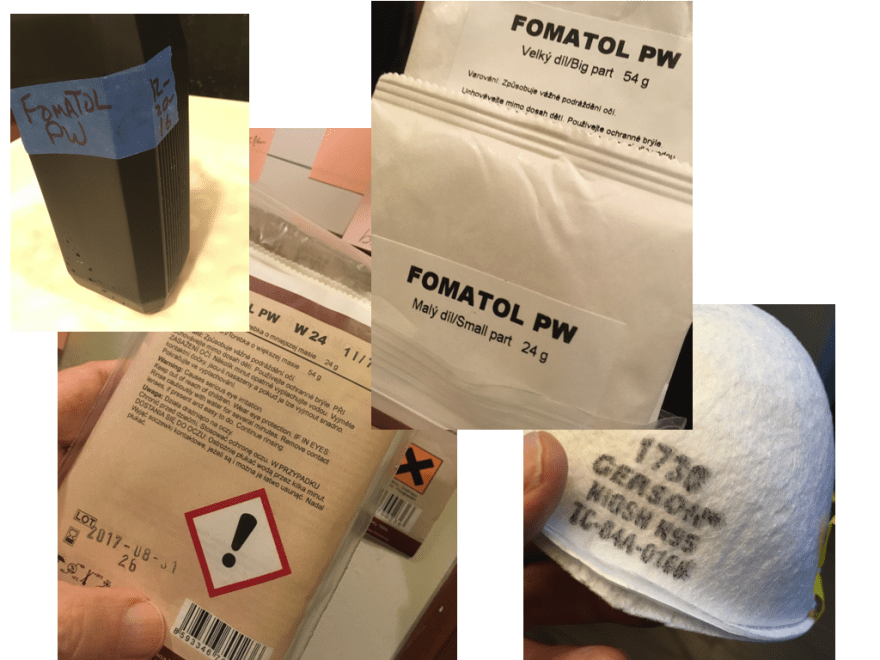
Fomatol PW is my standard warmtone developer. I’ve mixed from scratch, bought magic potions, changed proportions many times of the 50 years in the darkroom. This is the developer that satisfies my need. The disadvantages are availability and storage life; it does not have a long shelf life, even unmixed. As a working developer it is slow acting and exhausts quickly. The tray life is just hours. It outlasts an amidol developer, but it is not Dektol (D-72) my other common black-and-white print developer.
My typical developer is Dektol for proofs and edit prints. After selecting work for finals, I use a two tray method of image tuning. Fomatol PW and Moersch SE20C CATECHOL .
The english instruction sheets seem to be a source of wide ranging opinion about the developer agents, as well as the use of this developer. In going thru past notes, downloaded pdfs and, a few online posts of others, I think the product has changed. This change may be because of environmental regulations throughout the world.
At first, it was: “Specially formulated, glycine-hydroquinone” developer.” More recently, it is: “Specially formulated positive developer.” According to the US retailer Freestyle, it does not contain hydroquinone: no need for special shipping tags.
Mixing Fomatol PW
The only odd part of mixing is in understanding that “Big part” means the heavier bag. Both bags are the same size, but are different weights. Mixing directions are otherwise vary clear and simple to follow.
Using Formatol PW
Early directions gave development times based upon dilutions of 1+1, or 1+3; currently, directions are for undiluted stock. Sometimes I use it at 1+1, and have tested it at 1+3. Diluting this developer increases the times into the ‘lith’ timesphere (7 to 17 minutes) without ever getting a strong black. Using this as a stock developer is expensive, but it is worthwhile for my work.
Stock for 4 to 7 minutes using Fomatone, or Retrobrom Sp papers.
If changes to development time (rates) controls density peak and range, then highlight density control is achieved readily; a direct relationship exists between development and highlight densities. While controlling shadow separations is not as simple. Shadows are dependent upon the characteristic of Film-Developer mating. Working the exercise of making parametric curves illustrate these points.
The general formulation of developer: Reducing agent, preservative, accelerator, restrainer, solvent.
Restrainers make controlled development (reduction) possible. They can also alter the (size) color of silver in the print. Potassium Bromide making that “Dektol Green” tint. DuPont BB was often used to produce Blue Black (cold tone) of Brovira, Kodabromide papers. Kodak Anti-Fog No. 1 can be used as replacement, or as addition to potassium bromide. Restrainers (aka, anti-foggants) alter contrast of the image. More AF increases contrast of the print.
Characterizing Paper: Labnotes
Packaged developers can be modified. In the 1970s the following chems were used as addenda to Kodak, Ansco, Ilford print developers:
Hydroquinone, 4oz
Potassium bromide, 1-4 ounces
DuPont BB solution, or Kodak Anti-Fog No.1, also AF No.2
Elon (Metol), 1 pound
Sodium Sulfite, 5 pounds
Sodium Carbonate, 1 pound
Borax, 1 pound
1970s papers:
CONTRAST
KODAK & GAF
AGFA
very low contrast
1
1
2
NORMAL grade
2
3
3
4
high contrast
4
5
5
very high contrast (bang)
6
paper grade Rosetta.. convert to LER, ISO(R)
Paper brands:
Kodak Medalist (F1 -4), Kodabromide (F-1-4)
Agfa Brovira (111 -1-6)
GAF Jet (GL 1-4)
Ilford Ilfobrome (IB 0-5)
GAF Cykora (GL 1-4 ). an old warmtone friend
Agfa Portriga Rapid (111 1-4) the most used warmtone paper during Peak Silver printing age.
Contrast Control by Developer Dilution:
Brovira was processed in Dektol 1:3, this produced softer acting developer as adjustment to the higher contrast of Agfa Normal. Dektol (most paper devs) can be used at range of dilutions, that is, straight (stock) up to 1:4. Paper/developers of the silver age changed print tone, going browner (warmer) with increasing dilution. This was due to change in concentration of Hydroquinone/ Elon (metol) ratio. Ilford papers (2024) are built to resist such alterations. These changes make the paper less affected by developer exhaustion or mishandling in the small volume darkroom..




You must be logged in to post a comment.