why did the forum Crossover

an overnight. Not every error is the same error; not every color error is a crossover. Most aren’t.

separations. telling theory from experience. the cowboy from the hat

pigment diameters: a pigment isn’t a colorant of a fixed size. It doesn’t have to “fail to fit thru those tiny nozzles” in a jet printer to be a pigment. That test is a failure to thrive in a learning world.

[the green curve on the right is crossing over the blue curve] If it could be shifted to the right…

Structural pigments don’t have color.

“A dye is a colorant which is molecularly dispersed or solvated by a carrier. The carrier can be a liquid or a solid at room temperature. A commonly used carrier is water or a mixture of water and organic co-solvents. Each individual dye molecule is surrounded by molecules of the carrier. In dye-based inks, no particles are observable under the microscope.”

“Pigments are colored, black, white or fluorescent particulate organic or inorganic solids which usually are insoluble in, and essentially physically and chemically unaffected by, the vehicle or substrate in which they are incorporated. They alter appearance by selective absorption and/or by scattering of light. Pigments are usually dispersed in vehicles or substrates for application, as for instance in the manufacture or inks, paints, plastics or other polymeric materials. Pigments retain a crystal or particulate structure throughout the coloration process.” –CPMA – Color Pigment Manufacturers Association, Inc.
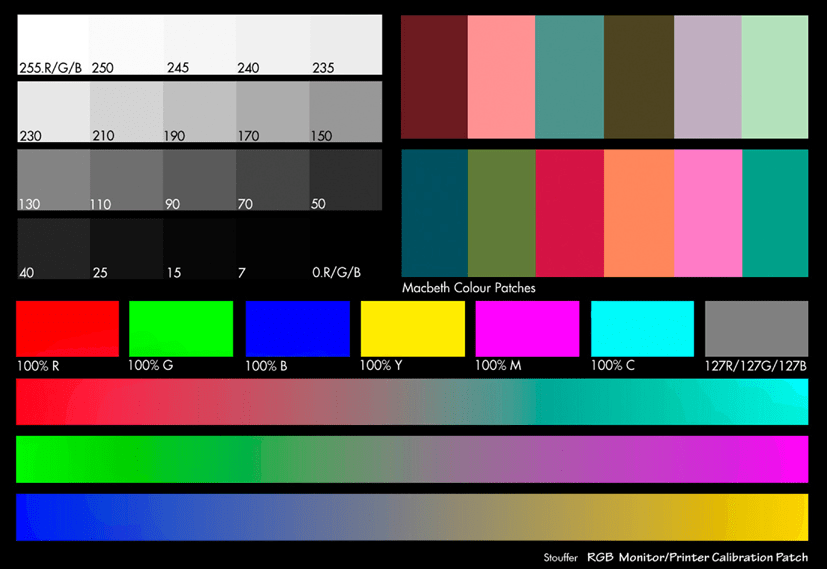
not a crossover. most of the green horns would think it was. this gif was made from two separate, seemingly balanced prints. at least the grey steps were correct.

The problem with pigment, carbon printers’ results are: Undercolor. undercolor — CMY have degraded, overlapped out of balance. UCR mask reduces these colors so that the K will be image content. Exposure controls amount removed. Soup the mask to a contrast that reduces in the shadow of the separation negatives.

mask is option in best match colorant sets.

the essential is matrix, dye, blank

masking is an aid to holding the Chrome for the paper

he was good at transferring information without killing imagination

Color Separation

— anxiety over the new network of knowledge. Talking before experience: if it sounds right; you heard it from someone who talks a lot, sounding complex, it must be sound.

[ he got the last bit correct ]

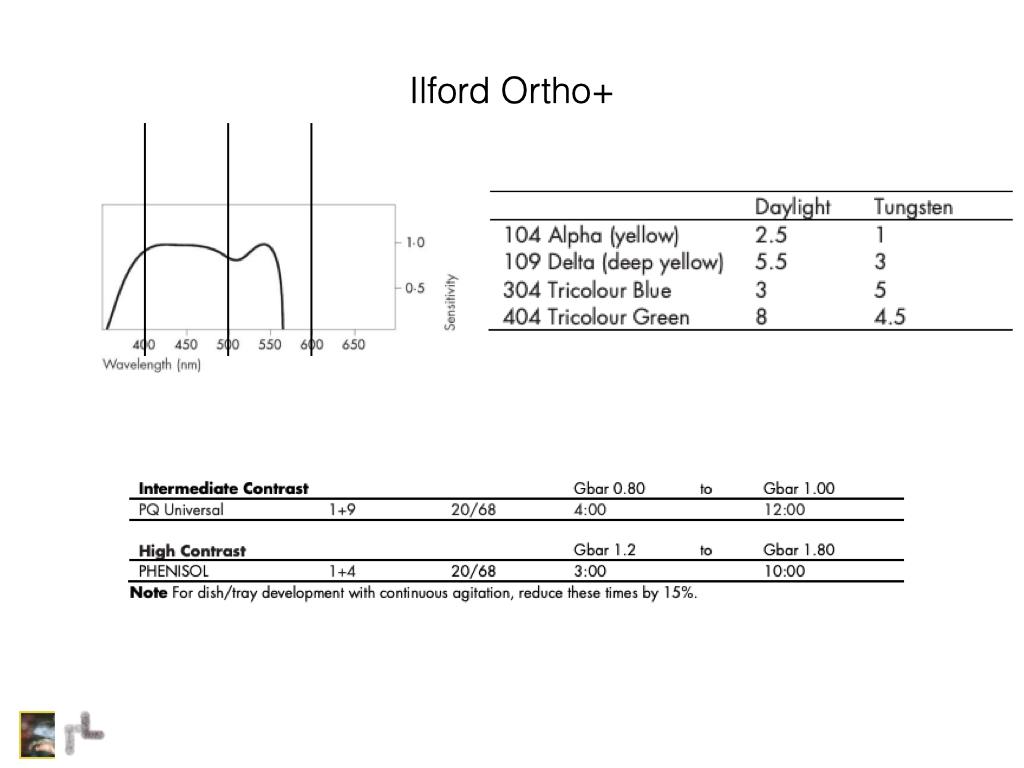
Ilford Ortho+ has excellent darkroom properties: easy to manipulate, wide range of linear response (it is what is used to make standard step wedges), AND it makes seps for TWO of the THREE colors. Only RED is missing.

Lesson: as always, look wider, avoid gossip groups.

Extra: the first color photograph was shown before panchromatic, or ortho film was invented.

[getting to separation negatives. more than one way to climb mount Fuji]

Skin Color..

the color of my hand. It changes as I age, and as I move inside, outside, in darkroom .

I’ve just been sorting old notes on my local drive, finding collected articles that I think must have been for something — just don’t know what. That doesn’t worry me, I collect so much more information, background to some midnight idea that is gone by the morning walk. That walk provides a different direction for the day.

“Despite the importance of reliable skin colour measurements, very little is known about the variability of these measurements and their dependency on the acquisition parameters. The main purpose of this article is to quantify the effect of these factors on the measurement reliability. Knowledge of the instrument settings that produce highest repeatability is useful for other researchers involved in skin measurements, and data on the inter-instrument agreement allows the meaningful comparisons between data sets obtained with different instruments. ” https://onlinelibrary.wiley.com/doi/full/10.1002/col.22230

“Background: Accurate skin colour measurements are important for numerous medical applications including the diagnosis and treatment of cutaneous disorders and the provision of maxillofacial soft tissue prostheses.” https://onlinelibrary.wiley.com/doi/pdf/10.1111/srt.12295

“Human skin colour measurements from four ethnic groups including 188 subjects were accumulated. Five to ten locations of each subject were measured by using two different instruments, a tele-spectroradiometer and a spectrophotometer. Three repeated measurements were accumulated for each
location. Repeatability of the measurements at different locations from different ethnicities was examined using the mean CIELAB colour difference from the mean (MCDM). The colour distribution between different locations of different ethnic groups was also studied by plotting the data in a* b* and L* C*ab planes. Systematic trends were found between different ethnicities and instruments.” http://www.imaging.org/site/PDFS/Reporter/Articles/2016_31/REP31_1_2015CIC_WANG_PG230.pdf

“The principles of color measurement established by the Commission International d’Eclairage have been applied to skin and the results expressed in terms of color space L*, hue angle, and chroma values. The distribution of these values for the ventral forearm skin of a sample of healthy volunteers is presented.” https://www.sciencedirect.com/science/article/pii/S0022202X92903477

So, those are some of the papers gathered. Several more follow the same tenor — I never finished where I was headed, I think, because that work isn’t going anywhere. The use as diagnostic? What I probably wanted had more to do with retouching, color sensitizing, attitude measurement based upon clearly gathered perceptual datasets.

Bringing this all out is the recent form of bullying —

Back to making profiles of photons on paper.