Durst – asking for instructions

Searching the web is easy; too easy. Getting answers is easy, also, too easy. The correct answer is rarely as easy as the online experts make it seem. Google catalogs the words, it doesn’t have a knowledge engine, so can’t access how valid the website is. The assumption of links, references is that more links, more use, means that it is correct. Actually, it means there is a popularity rank to that site. There is a path, a cliche of words. The error of this is circular. More and more seekers are sent to the tent at the end of the well travelled path.

Another example has played out on Large Format Forum:

I asked and was told assembly was “really hard”

as it turns out, it is actually quite easy. Needing only one person, a 24mm socket wrench and knowledge. Reminder, these enlargers were sold without installation support. Photographers with limited mechanical skill put them together in basements, garages all across Europe and America.

the answer:

 put the carrier on the column. 
Because of the spring, turn the main screw  on the left of the arm) to the left, holding it tight, so the weight is released allowing it to be easily mounted. 
Next, lift the (now released of tension) smaller clamp and place it on the lower column, 
turn the big screw back to the right.
 You have a functional baseboard lift mechanism.

Simple enough. So, why does a website that takes pride in keeping analog photography alive, as well as having an elite gathering of knowledgeable sharing avid photographers often (always?) the answer wrong? We already know why you are sent there. google just works that way.

Simple Facts: the thread that gave raise to this example went on for 5 pages, protracted over 9 months. The participants were ones most often seen answering questions on Durst and other darkroom equipment. They post on photrio, as well. Just gathering a rough count shows over 750 threads concerning Durst enlargers on Large Format Forum. That is a count of threads, not posts. That is a whole lot of ‘text’ to get through to find much of value, much of immediate use to someone setting out on a darkroom practice.

Who answered? A German company that refurbishes enlargers.

Every Start

The procedure is the same, no matter the materials I begin with a proof, a test. From film or sensor, rolls or sheets. It was how I began, it is how I work now.

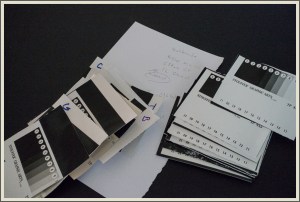
From the ‘index’ of images come the next round. In this project these small prints will be cut apart so that multiple edits can be made.

Then, the decision: is more needed? It usually is. In ongoing long-term projects the end is never found. At some point, it is best to consider the closing will never come.

Make, select, edit; endlessly, or until you are satisfied enough to set it aside.

Involving others in this cycle is hazardous. In most cases they will not be at the same level of understanding as you, so may over, or under commit; too loud, or soft a reaction. At this stage this project has about 150 images. It is just begun yet already has several directions possible.

Fortunately, it doesn’t have to be published. There is no deadline: no show, no editor waiting. Only the cold glow of the table asking:

WHAT’S NEXT?