
photographers are printers, not printmakers.
Making Prints isn’t Printmaking
This is a post in 2 sections. The first part expands my other posts on the foibles of the fora folks. The second section is more positive in approach. I hope it provides seeds you can use within your work. It may provide information you missed, because you are too young, or maybe your teacher just bumped along with their own development.
Why They Say Printmaker:
For over a decade I’ve cringed as the forum dwellers struggle to explain themselves to themselves – How to define their position; claim a position on the map by naming it.
They seem to love the word “printmaker.” Printmaker, to them, explains what differentiates their work from the digital chimpers and instagramers – the cell phonies.
“You have to see it.” “It must look great in person.” “Wish I had a screen big enough to enjoy all the detail.” Read the travel badges of the vacation film folk.
They take pride of title – like riders with ebay medals – which one to get one without understanding what it means beyond having bragging points in an internet cafe, or bar.
Pretenders begin with the camera; printmakers begin with blank paper, then add a problem; from that comes fire or ash.
Other Posts:
What Bunnell Meant:
Photography as Printmaking — March 19 – May 26, 1968
“The approach to photography as printmaking seeks to make the medium visible, whereas the so-called * straight’ approach seeks to make it Invisible, “ – Peter Bunnell, Director of the exhibition and Curatorial Associate in Department of Photography, MoMA.
and
how the artist has been moved by his own inner compulsion to select a technique … integrate Its expressive potential with his Initial vision, and extend It through his final presentation
What actually distinguishes Photo Printer and Printmaker is:
— what printmaking teachers call printmaking:
Richard Graf was my lithography teacher at SFAI. Stone lithography – grease and water stuff. The edition was what separated the casual from the actual printmaker. Printers made monoprints, while printmakers made editions — either the same work, or work principled by the same key image.
printmaker’s mind is like a mystery writers… know the ending.
printmaking is a work on paper, usually ink, but in the case of photography it is metal or dye: does it reflect or block is an awareness question.
In 1959 lithography, as hand based art, had declined to such a low that funding for continued teaching was needed from grant organizations.
Printmaking changed even more in the 70s than photography did. Bunnell only noticed photographer space; printmakers took that in with ease, moving beyond its limitations to advance itself even further.
Art has never been universal; never a language for the masses. Salesmen talk about photography as though it was such a universal communicator, but it isn’t. It can’t be. The foundation of culture – death fear fire – aren’t even communicable across time based culture.
problem: all styles filter through the same skills solutions. Growth occurs with conceptual as well as formal applications of process, by understanding it more completely, not just longer.
Printmakers are changing again; these changes will leave additional remains for the Carnie folks to gather round and claim as their ground. These are rock sitters at the debris field. Fine printing is always discovering new problems, not renewed solutions.
Tools Are
Paper, ink, and mark makers.
factors in their selection are driven, bounded by the goal of the artist. Craft isn’t the limitation since it isn’t either foundation nor goal of esthetic problems.
Craft is an aspect of commerce. Fine papers are sold in packs, 25 sheets is common in printmaking paper. If your paper need is low, you will probably buy in single sheets. Such low volume is the mark of a trial user, not an accomplished craftsman. If you’re not doing enough work to warrant inventory, then you will be forced to confirm the quality of materials with every shipment. Generally, this is considered scrap time —
paper as wet system, like cotton cloth it will shrink and stretch; but only so much, so many times. if your process requires 5 wet dry cycles, test your paper for 6 wet dry cycles, measuring the durability and the shrink, or stretch amount. If you don’t know your paper, you aren’t a printmaker. Fine paper is packed in 25 sheet ‘bags’ – if you don’t work much, then you probably buy in single sheet lots. This is risky, but cheap.
Getting Stuff:
manufacturer > distributor > dealer > you
which means: your ability to solve problems is based upon how high you can reach. Most paper companies have contact information. They are the source of ‘fixes,’ and corrections. If you aren’t happy with a paper: tell your dealer, and the manufacturer. Telling your forum friends doesn’t get you replacement paper.
it makes a difference who you hang out with… solve a problem by asking more probing question.. dig deeper to uncover more
A printmaker businessman would ask their distributor for explanation, not the guy on the virtual barstool next to them. And they would get the correct answer quickly — I did. It took less than 36 hours to find out that Arches had a supply problem. By way of apology, they shipped me an new package of paper, telling me to send one sheet back using the call tag they supplied. In that replacement pack was included sheets of other paper they made — all in 22×30 size
Paper Sources:
knowing the paper, isn’t thinking in paper…
arches platine
Arches has said (Feb, 2017): “Our ARCHES® paper mill is aware of a recent paper absorbency issue which appears to be related to some of the sheets of a single run of ARCHES® Platine.Paper making is a complex process and every effort is made to be consistent.””… if you have any other contacts who had some problems with our Arches Platine®, feel free to give them our name.” maryvonne.humiliere at munksjo.com
Where to Buy Platine:
- Bostick & Sullivan
- Dolphin Papers
- YourArtSupplies.com
- Graphic Chemical
- Takach Paper
- Talas
Papers For Hand-coated Photography
(platinum, cyanotype, gum…)
- Arches Platine [11/17]
- Bergger COT 320 [11/17]
- Hahnemühle Platinum Rag [11/17]
-
HERSCHEL and BUXTON PLATINOTYPE [11/17]
- Legion Paper Revere Platinum [11/17]
For silver papers OR as high gloss print:
-
Adox Art Baryta … for azo type self coating … also see adox colloida.. this paper accentuates brush strokes of emulsion (chloride) coating. [11/17]
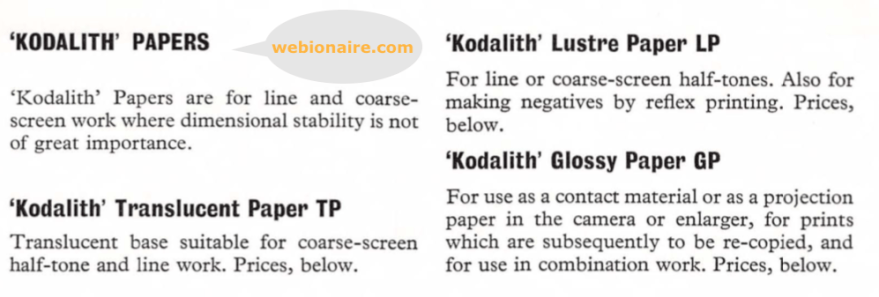

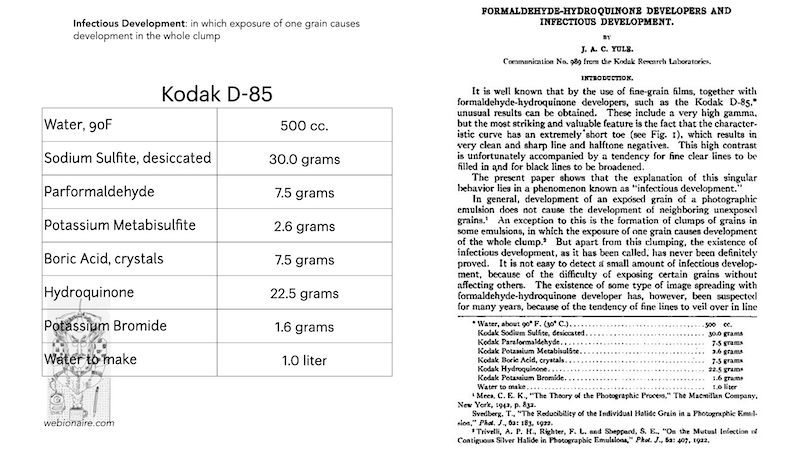
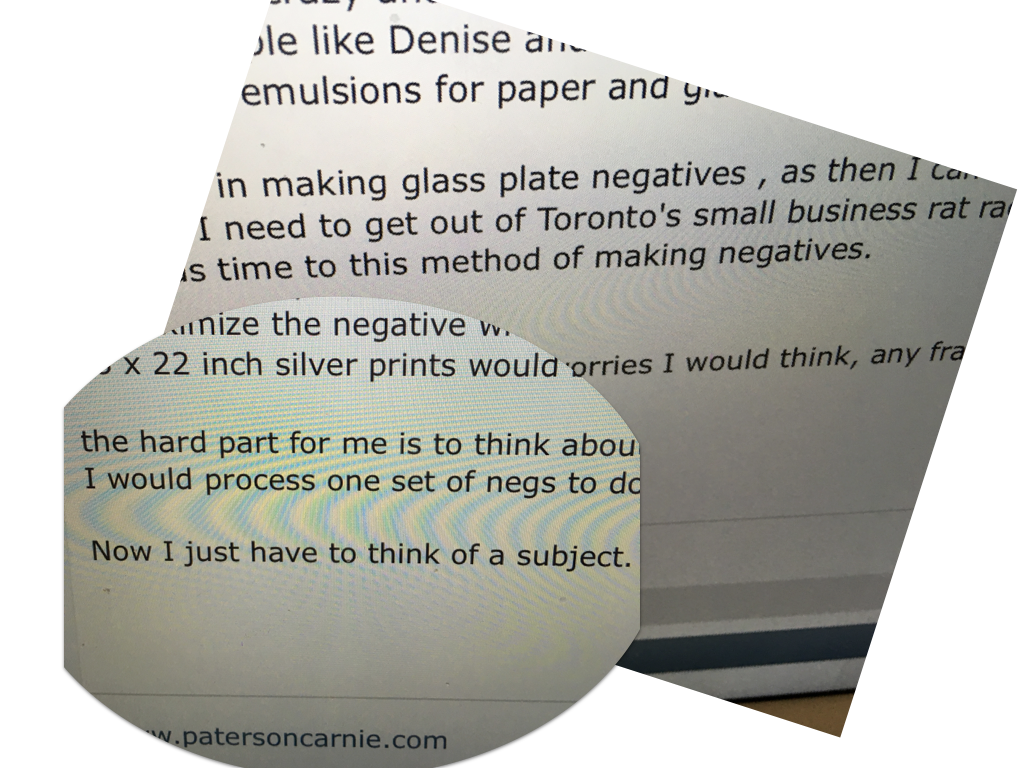 Unless you are a Carnie. Most long time participants in online photo forums limit their discussion to method and technique. They never understand this limits their growth. Carnie is one longtime dedicated participant. He serves as archtypical printmaker. As he notes: Now I just have to think of a subject.
You must be logged in to post a comment.